
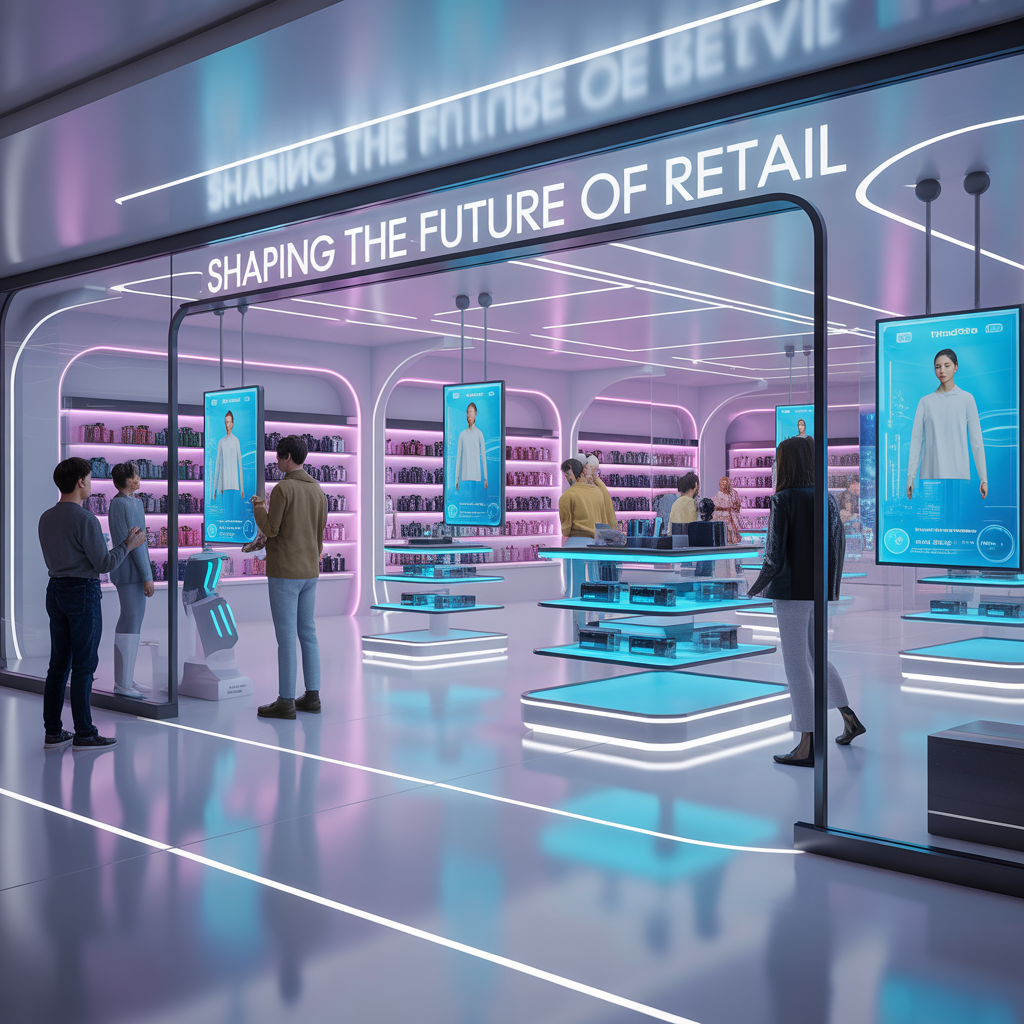
Retail Artificial Intelligence: Little-Known Hacks, Myth-Busting Facts, and Revolutionary Concepts Shaping the Future of Retail
Retail Artificial Intelligence is surrounded by hype, misconceptions, and half-truths. While many retailers rush to adopt AI tools, few truly understand how to extract real value from them.
Beneath the surface of popular narratives lies a set of little-known hacks, misunderstood realities, and revolutionary concepts that are quietly redefining how retail operates.
The retailers gaining the most from AI are not necessarily the most technologically advanced—they are the most strategically informed.
They know which myths to ignore, which shortcuts actually work, and which emerging ideas will reshape the industry long before they become mainstream.
This article uncovers the lesser-known tactics that improve AI performance, dismantles common myths holding retailers back, and explores revolutionary concepts that are redefining the future of commerce.
Little-Known Hacks That Make Retail AI Far More Effective
Most AI gains in retail don’t come from massive transformations. They come from subtle optimizations few people talk about.
Train AI on Decisions, Not Just Outcomes
A little-known but powerful hack is training AI models on historical decisions rather than only sales outcomes.
When AI learns why certain pricing, assortment, or promotion decisions were made—and what happened afterward—it develops more nuanced judgment.
This dramatically improves recommendation quality and alignment with business realities.
Use AI to Identify What to Stop Doing
Retailers often focus AI on discovering new opportunities, but some of the biggest gains come from identifying actions that should be eliminated.
AI can flag promotions that erode margins, products that cannibalize better sellers, or campaigns that generate noise rather than value.
Stopping unproductive activity frees resources and improves overall performance.
Segment by Behavior Volatility, Not Demographics
Instead of grouping customers by age or income, advanced retailers segment them by behavioral consistency.
AI identifies which customers are predictable and which are volatile, allowing different engagement strategies for each group.
This hack improves personalization accuracy and reduces wasted marketing spend.
Operational Hacks That Improve AI ROI
AI often underperforms because of how it’s deployed, not because of technical limitations.
Shorter Feedback Loops Beat Bigger Models
Retailers obsessed with large, complex models often miss the value of fast feedback. Smaller models updated frequently outperform large models updated quarterly.
Speed of learning matters more than theoretical sophistication.
Human Overrides Are a Feature, Not a Failure
Allowing staff to override AI recommendations provides critical learning signals. Each override teaches the system something new, improving future accuracy.
Retailers that suppress overrides lose valuable intelligence.
One KPI Per Model
High-performing retailers assign each AI model a single primary KPI. This clarity prevents conflicting objectives and ensures models optimize what truly matters.
Myth-Busting Facts About Retail Artificial Intelligence
Many retailers limit their own success by believing persistent myths about AI.
Myth 1: AI Requires Massive Data Volumes
Reality: High-quality, relevant data consistently outperforms large volumes of noisy data. Many successful retail AI systems operate effectively with limited but well-structured datasets.
Myth 2: AI Replaces Human Expertise
Reality: AI amplifies human expertise. The best results come from collaboration between intelligent systems and experienced professionals.
AI handles scale and speed; humans handle context and judgment.
Myth 3: AI Delivers Instant Results
Reality: AI delivers compounding value over time. Early phases often focus on learning and calibration.
Retailers expecting immediate transformation often abandon AI just before it becomes powerful.
Myth 4: AI Is Only for Large Retailers
Reality: Smaller retailers often benefit more because they can implement AI faster, adapt workflows more easily, and avoid legacy system constraints.
Revolutionary Concepts Redefining Retail AI
Beyond hacks and myths lie ideas that fundamentally change how retail operates.
Predictive Commerce Ecosystems
AI is shifting retail from reactive selling to predictive fulfillment. Systems anticipate needs and position inventory, offers, and messaging before demand becomes visible.
This concept redefines convenience and loyalty.
Self-Optimizing Retail Systems
Future-facing retailers are building systems where pricing, inventory, promotions, and staffing adjust automatically within defined parameters.
Human teams focus on strategy and creativity rather than execution.
This is a radical shift in operating models.
AI as a Strategic Advisor
Rather than supporting individual decisions, AI increasingly provides strategic guidance—identifying long-term trends, structural inefficiencies, and growth opportunities that humans might miss.
Retailers who treat AI as an advisor rather than a tool gain deeper insight.
Little-Known Psychological Impacts of AI-Driven Retail
AI doesn’t just change operations—it changes how customers think and behave.
Consistency Builds Trust Faster Than Discounts
AI-driven consistency in pricing, availability, and experience builds trust more effectively than aggressive promotions. Customers reward predictability with loyalty.
Reduced Friction Increases Perceived Value
When AI removes friction—search time, confusion, delays—customers perceive greater value even if prices remain unchanged. This is a powerful, often overlooked benefit.
Subtle Personalization Outperforms Obvious Personalization
Customers respond better to AI that feels intuitive rather than intrusive. Retailers who personalize quietly outperform those who overemphasize customization.
Why These Concepts Remain Underutilized
If these ideas are so powerful, why aren’t they widespread?
Cultural Resistance
Many organizations are uncomfortable trusting machines with decisions traditionally made by humans.
Misaligned Incentives
Short-term performance metrics discourage experimentation and long-term learning.
Vendor-Led Thinking
Retailers relying too heavily on vendors often adopt generic solutions rather than developing strategic intelligence.
How Forward-Thinking Retailers Apply These Insights
Retail leaders apply little-known hacks selectively, challenge myths actively, and test revolutionary concepts incrementally.
They:
-
Pilot AI in high-impact areas
-
Measure learning velocity, not just outcomes
-
Build internal understanding rather than outsourcing intelligence
This disciplined approach allows them to move ahead while competitors hesitate.
The Future Shaped by These Hidden Truths
Retail Artificial Intelligence will increasingly reward insight over investment.
As tools become commoditized, competitive advantage will come from how AI is applied, governed, and integrated into strategy.
Retailers who understand the hidden hacks, reject limiting myths, and embrace revolutionary concepts will define the next era of commerce.
Final Strategic Insight
Retail Artificial Intelligence is not mysterious—it’s misunderstood.
Those who look beyond surface narratives discover a powerful truth:
AI doesn’t win by doing more.
It wins by doing better, faster, and smarter—quietly and consistently.
Retailers who internalize this reality will not just survive the AI era—they will lead it.