
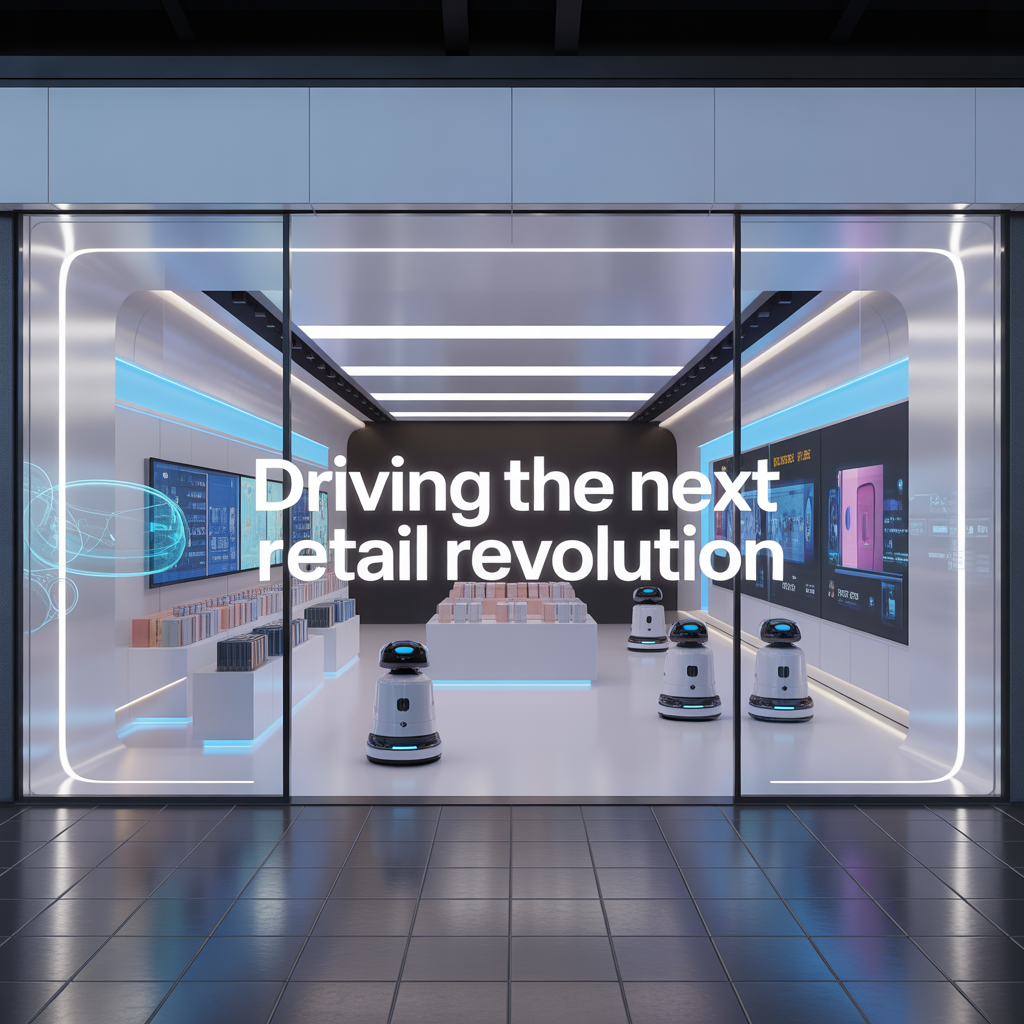
Retail Artificial Intelligence: Unorthodox Approaches, Cutting-Edge Techniques, and Confidential Insights Driving the Next Retail Revolution
Retail Artificial Intelligence has reached an inflection point.
While many organizations still focus on conventional AI use cases—recommendation engines, chatbots, and demand forecasting—a smaller group of forward-thinking retailers is exploring unorthodox approaches that redefine what AI can do in commerce.
These retailers are combining cutting-edge techniques with confidential, experience-driven insights that rarely make it into case studies or conference presentations.
What sets them apart is not access to better technology, but a willingness to rethink assumptions about retail operations, customer behavior, and decision-making itself.
This article explores how unconventional AI strategies are reshaping retail, the most advanced techniques powering these changes, and the confidential insights that separate leaders from laggards.
Why Conventional AI Thinking Is Limiting Retail Growth
Most retail AI strategies follow predictable paths. They aim to automate existing processes, optimize known metrics, and incrementally improve performance.
While effective in the short term, this mindset often caps long-term impact.
Unorthodox retailers recognize a critical truth: AI is not just a tool for efficiency—it is a mechanism for discovering entirely new ways to operate.
Instead of asking how AI can improve current workflows, they ask how AI can replace, reorder, or reimagine them.
This shift in thinking opens doors to opportunities competitors never see.
Unorthodox Approaches Redefining Retail AI
The most disruptive uses of AI in retail challenge deeply ingrained practices.
Reversing the Planning Sequence
Traditional retail planning moves from forecasting to assortment to pricing. Unorthodox AI-driven retailers reverse this sequence.
They allow AI to simulate thousands of pricing and assortment scenarios first, then identify which demand patterns are most profitable to pursue.
This inversion transforms planning from reactive forecasting into proactive market shaping.
Designing Stores and Websites Around Algorithms
Rather than adapting AI to existing layouts, advanced retailers design physical stores and digital interfaces specifically for algorithmic optimization.
Shelf spacing, navigation flows, and product hierarchies are structured to maximize AI learning speed and decision accuracy.
This approach accelerates insight generation and creates experiences that evolve continuously.
Treating Customers as Dynamic Systems
Instead of static personas or segments, unorthodox retailers model customers as evolving systems influenced by time, context, and emotional state.
AI tracks behavioral trajectories rather than isolated actions, enabling far more precise engagement strategies.
Cutting-Edge AI Techniques Powering These Shifts
These unorthodox approaches are enabled by advanced techniques that go far beyond standard machine learning.
Reinforcement Learning in Commerce
Reinforcement learning allows AI systems to learn through trial and feedback, optimizing decisions over time.
In retail, this technique is used to refine pricing strategies, promotion timing, and assortment mixes dynamically.
Unlike rule-based systems, reinforcement learning adapts continuously, even as customer behavior shifts.
Causal AI for Decision Confidence
Cutting-edge retailers use causal AI to understand not just correlations, but cause-and-effect relationships.
This allows them to answer questions like: Did this promotion drive demand, or would sales have increased anyway?
Causal understanding improves confidence in AI-driven decisions and reduces costly misinterpretations.
Synthetic Data Generation
When historical data is limited or biased, retailers generate synthetic data to train AI models.
This technique allows simulation of rare events, new product launches, or market disruptions—giving retailers a safe environment to test strategies before deploying them live.
Confidential Insights from Advanced Retail AI Implementations
Some of the most valuable lessons from AI deployments are rarely shared publicly.
AI Performance Depends on Organizational Design
Confidentially, many AI initiatives fail not because of technical limitations, but because organizations are structured incorrectly.
Teams optimized for static planning struggle with adaptive AI systems.
Retailers who succeed reorganize around decision loops rather than departments—aligning data, authority, and accountability.
More Data Is Not Always Better
Advanced practitioners know that excessive data can dilute signal quality. Carefully curated, high-relevance data often produces better AI outcomes than massive, unfocused datasets.
This insight contradicts the common belief that AI success requires endless data accumulation.
AI Changes Power Dynamics Internally
When AI influences pricing, assortment, and promotions, traditional hierarchies are challenged.
Merchandisers, marketers, and planners must learn to collaborate with intelligent systems rather than control them outright.
Retailers who acknowledge and manage this shift outperform those who ignore it.
Unorthodox AI Use Cases Delivering Outsized Impact
Some of the most powerful AI applications in retail remain largely unknown.
Emotion-Aware Engagement Modeling
AI systems analyze language, browsing behavior, and interaction patterns to infer emotional states.
Engagement strategies then adapt—reducing pressure when frustration is detected or accelerating conversion when confidence is high.
This subtle emotional intelligence significantly improves customer satisfaction.
Negative Space Optimization
Instead of focusing solely on what to show customers, AI optimizes what not to show.
Reducing clutter, limiting options, and suppressing irrelevant messaging often increases conversion more than adding new features.
This counterintuitive approach reflects deep understanding of human decision psychology.
AI-Guided Brand Consistency Enforcement
Advanced AI models monitor all customer-facing content—ads, emails, product descriptions, chatbot responses—to ensure tone, messaging, and values remain consistent.
This preserves brand integrity at scale, something manual processes struggle to achieve.
Why Cutting-Edge AI Favors the Brave, Not the Big
Contrary to popular belief, disruptive AI strategies often benefit smaller, more agile retailers.
Without heavy legacy systems, they can:
-
Experiment faster
-
Redesign workflows more easily
-
Embed AI deeper into operations
Large retailers often struggle to adopt unorthodox approaches because their systems and incentives reward stability over experimentation.
Risks of Unorthodox AI—and How Leaders Manage Them
Advanced strategies carry real risks.
Model Drift and Over-Automation
Highly autonomous systems require constant monitoring. Leaders establish guardrails, audit mechanisms, and rollback processes to prevent runaway decisions.
Customer Perception Risks
Unconventional engagement strategies must feel helpful, not manipulative. Successful retailers prioritize transparency and customer control.
Regulatory and Ethical Complexity
As AI becomes more influential, compliance and ethics grow in importance. Advanced retailers involve legal and ethics teams early in AI design—not as afterthoughts.
The Strategic Shift Underway in Retail AI
Retail Artificial Intelligence is transitioning from optimization to orchestration.
Future systems will coordinate pricing, inventory, engagement, staffing, and supply chain decisions simultaneously—balancing trade-offs holistically rather than optimizing in silos.
Retailers embracing unorthodox approaches today are effectively training the intelligence that will run tomorrow’s commerce ecosystems.
Key Takeaway for Retail Innovators
Retail AI leadership no longer comes from copying best practices. It comes from questioning them.
Unorthodox approaches reveal new possibilities.
Cutting-edge techniques unlock hidden leverage.
Confidential insights expose what truly drives success.
Retailers who combine all three are not just improving performance—they are redefining what retail looks like in an AI-driven world.