
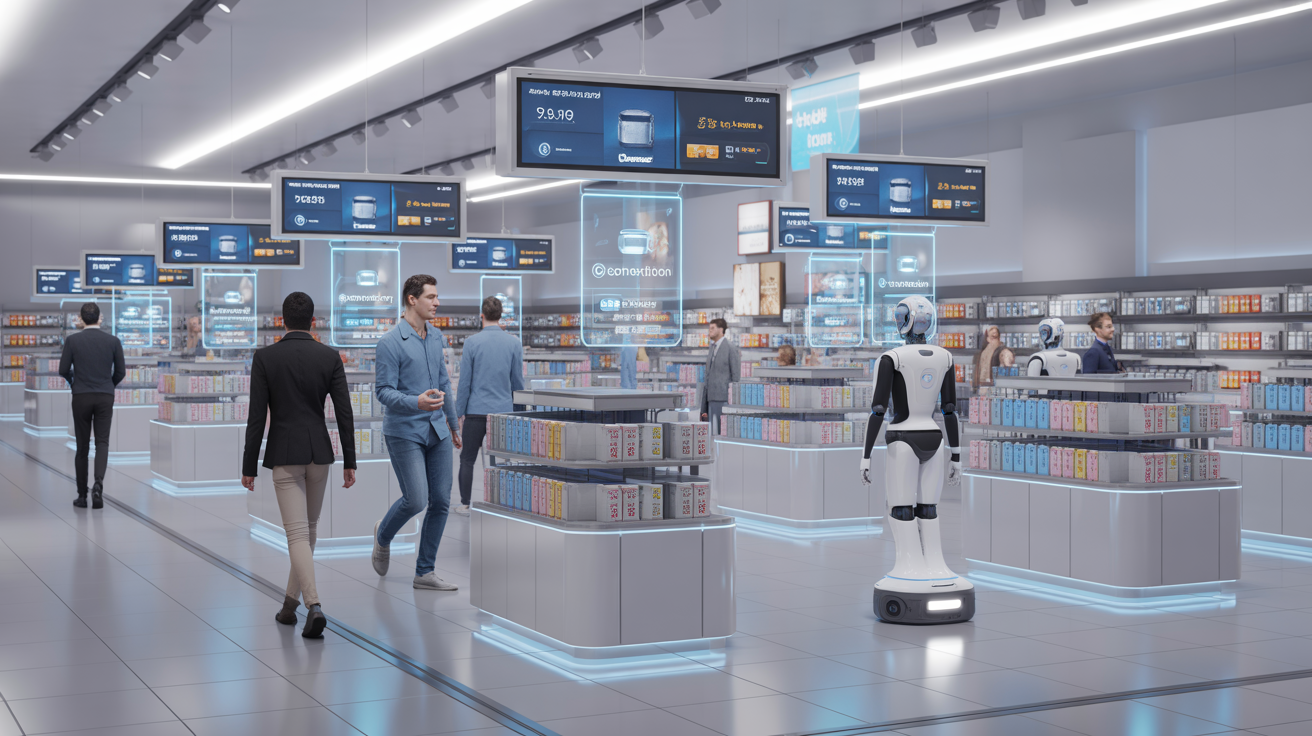
Retail Artificial Intelligence: Proven Techniques, Rare Insights, and Next-Gen Strategies Reshaping Commerce
Retail Artificial Intelligence has moved beyond experimentation into a critical driver of competitive advantage.
Today’s most successful retailers rely on proven AI techniques to forecast demand, optimize inventory, and personalize customer experiences—while quietly preparing for next-generation strategies that will redefine how commerce works.
What sets leaders apart is not just adoption, but execution informed by rare insights into how AI truly performs in real-world retail environments.
This article explores the proven techniques delivering results today, uncovers rare insights from advanced implementations, and examines the next-gen strategies shaping the future of retail.
Proven AI Techniques Powering Retail Performance
Retailers who see consistent returns from AI focus on techniques with measurable impact rather than experimental hype.
Predictive Demand Forecasting
Machine learning models analyze historical sales, seasonality, promotions, weather data, and regional behavior to predict future demand with far greater accuracy than traditional forecasting methods.
These systems adjust continuously, allowing retailers to respond quickly to changes in consumer behavior and market conditions.
Intelligent Inventory Optimization
AI-driven inventory management systems calculate optimal stock levels at the SKU and store level.
They factor in lead times, supplier reliability, product lifecycles, and sales velocity to reduce both overstock and stockouts.
Retailers using these techniques report higher sell-through rates and improved cash flow.
Personalized Product Recommendations
Recommendation engines powered by AI increase average order value by suggesting relevant products based on browsing history, purchase behavior, and contextual signals.
Unlike rule-based systems, machine learning models evolve with customer preferences, delivering increasingly accurate suggestions over time.
Rare Insights from Real-World Retail AI Deployments
While AI case studies often focus on success stories, rare insights come from understanding what happens beneath the surface.
Data Preparation Consumes Most of the Effort
In practice, over half of AI project timelines are spent cleaning, unifying, and validating data.
Retailers who invest early in data quality consistently outperform those who rush deployment. Clean data enables faster model training, higher accuracy, and better decision-making.
Hybrid Human-AI Models Perform Best
Fully automated AI systems often struggle in complex retail environments. The most effective setups combine AI-driven recommendations with human oversight.
Merchandisers validate forecasts, store managers refine suggestions, and AI learns from these interactions, creating a powerful feedback loop.
Customer Trust Impacts AI Effectiveness
AI personalization only works when customers trust how their data is used.
Retailers that communicate data practices clearly and offer customization controls see higher engagement rates and better long-term loyalty.
Next-Gen Strategies Transforming Retail AI
The next generation of retail AI goes beyond optimization into autonomy and prediction.
Autonomous Merchandising Systems
Next-gen AI platforms are beginning to automate merchandising decisions—selecting assortments, planning promotions, and adjusting shelf space based on real-time performance.
These systems reduce decision latency and improve responsiveness to market changes.
Predictive Customer Journey Modeling
Rather than reacting to customer actions, advanced AI models predict the next likely step in a shopper’s journey.
This enables proactive engagement, such as offering timely discounts, personalized content, or restock alerts before the customer actively searches.
AI-Powered Dynamic Pricing at Scale
Dynamic pricing systems are evolving to consider customer sensitivity, competitor behavior, inventory levels, and demand signals simultaneously.
These next-gen strategies allow retailers to maximize margins without sacrificing customer perception.
Where Many Retailers Still Fall Short
Despite access to advanced tools, many retailers struggle to realize AI’s full value.
Fragmented Technology Stacks
Disconnected systems prevent AI from accessing holistic data. Unified commerce platforms significantly improve AI accuracy and performance.
Short-Term Thinking
AI success compounds over time. Retailers expecting immediate results often abandon initiatives prematurely, missing long-term gains.
Skill Gaps and Organizational Silos
AI requires collaboration between IT, merchandising, marketing, and operations. Retailers that break down silos see faster innovation and better outcomes.
Opportunities for Mid-Sized and Growing Retailers
Retail AI is increasingly accessible thanks to cloud-based solutions and modular platforms.
Mid-sized retailers can start with demand forecasting, recommendation engines, or customer segmentation tools that integrate easily with existing systems.
These proven techniques deliver quick wins while laying the foundation for next-gen strategies.
By scaling incrementally, retailers avoid complexity while gaining competitive capabilities once reserved for enterprise brands.
The Road Ahead for Retail Artificial Intelligence
Retail AI is shifting from decision support to decision execution.
As models become more accurate and autonomous, retailers will rely on AI not just to inform strategy, but to act in real time across pricing, inventory, marketing, and customer engagement.
Those who master proven techniques today, learn from rare insights, and prepare for next-gen strategies will shape the future of retail—while others struggle to keep up.
Retail Artificial Intelligence is no longer about experimentation. It’s about execution, trust, and continuous learning.
The retailers that understand this evolution are the ones positioned to lead in an increasingly intelligent commerce landscape.