
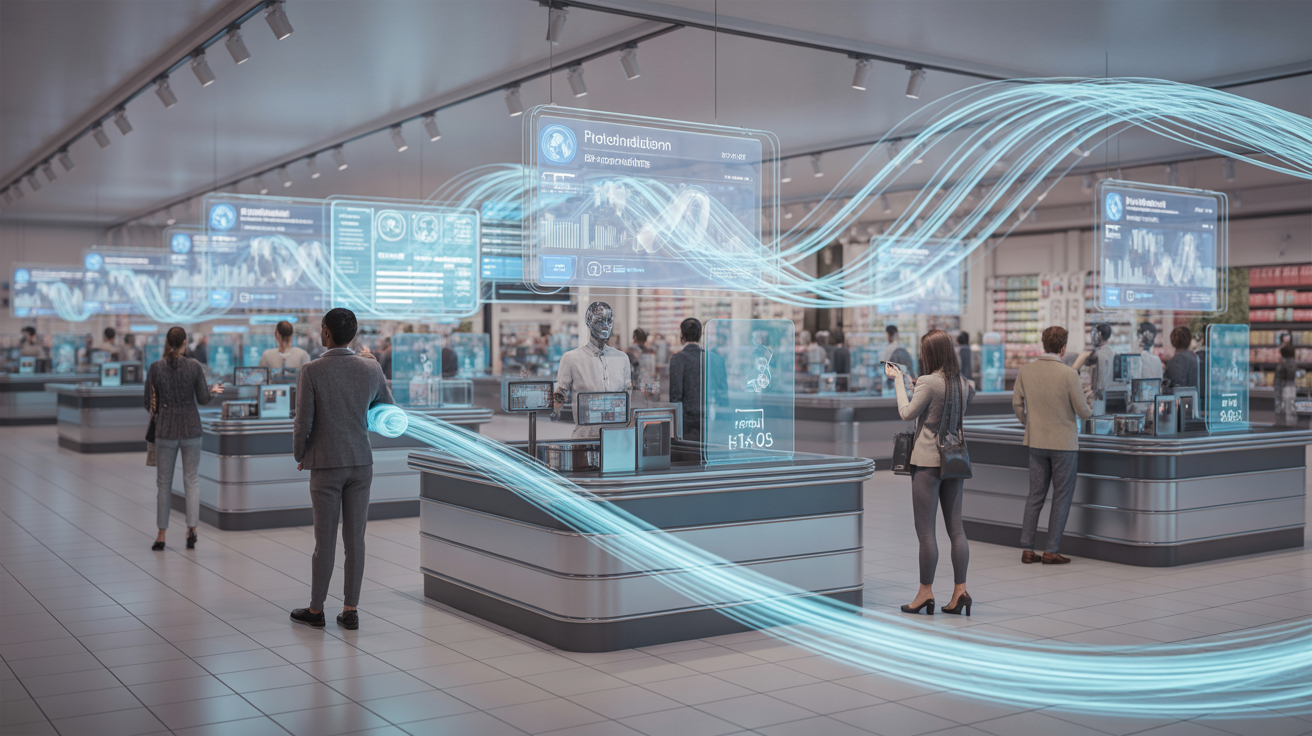
Retail Artificial Intelligence: Advanced Strategies, Behind-the-Scenes Systems, and Untapped Potential
Retail Artificial Intelligence is no longer limited to futuristic experiments or tech giants with unlimited budgets.
Today, AI quietly operates behind the scenes of the most successful retail brands, optimizing decisions, automating operations, and unlocking opportunities most businesses haven’t even realized exist.
While customers may never see these systems at work, their impact is profound—reshaping profitability, efficiency, and customer experience from the inside out.
This article explores advanced AI strategies used in modern retail, reveals what’s really happening behind the scenes, and highlights the untapped potential that forward-thinking retailers can still capitalize on.
Advanced Strategies Driving Modern Retail AI
Leading retailers don’t adopt AI randomly. They deploy it strategically across high-impact areas where data meets decision-making.
Predictive Analytics for Smarter Decision-Making
AI-powered predictive analytics analyze historical sales, seasonal trends, local events, and real-time consumer behavior to forecast demand with remarkable accuracy.
Retailers use these insights to plan promotions, allocate inventory, and avoid costly overstock or stockouts.
Unlike traditional forecasting, AI adapts continuously as new data flows in.
Customer Segmentation at Scale
AI enables retailers to move beyond basic demographics. Machine learning models group customers by behavior, preferences, purchase timing, and lifetime value.
These micro-segments allow brands to deliver highly targeted offers that feel personal rather than promotional, increasing conversion rates and customer loyalty.
Automation of Repetitive Operations
Advanced AI systems automate routine retail tasks such as invoice processing, returns management, and supplier communication.
This reduces human error, speeds up workflows, and frees employees to focus on higher-value activities like customer engagement and strategic planning.
Behind-the-Scenes AI Systems Powering Retail Success
Many of the most valuable AI systems in retail operate invisibly, but they are foundational to modern success.
AI-Driven Supply Chain Optimization
Behind every well-stocked shelf is an AI engine monitoring supplier performance, transportation delays, fuel costs, and geopolitical risks.
These systems recommend alternative suppliers, adjust reorder points, and optimize delivery routes in real time.
Retailers using AI-optimized supply chains are more resilient during disruptions and better positioned to scale.
Smart Inventory Management Engines
AI continuously analyzes sales velocity, product lifecycles, and store-level demand to automate replenishment.
Instead of relying on static reorder thresholds, intelligent systems adapt dynamically, ensuring the right products reach the right locations at the right time.
Fraud Detection and Loss Prevention
Retail AI monitors transactions, employee behavior, and customer activity to detect suspicious patterns.
Whether it’s return fraud, payment abuse, or internal theft, machine learning models flag anomalies early—reducing losses without disrupting legitimate customers.
The Untapped Potential Most Retailers Miss
Despite widespread AI adoption, much of its potential remains underutilized—especially among small and mid-sized retailers.
AI-Enhanced In-Store Experiences
While e-commerce personalization is common, physical stores often lag behind.
AI can analyze foot traffic patterns, dwell time, and engagement to optimize store layouts, staffing levels, and promotional displays.
This turns brick-and-mortar locations into data-driven environments rather than static spaces.
Voice and Conversational Commerce
Voice-enabled shopping assistants and AI-powered customer service tools are still underused in retail.
These technologies reduce friction, handle high volumes of inquiries, and create more natural shopping experiences—especially for mobile and smart-device users.
Employee Intelligence Platforms
AI isn’t just for customers. Advanced retailers use AI to support employees by providing real-time product knowledge, sales recommendations, and performance insights.
This transforms frontline staff into informed advisors rather than transactional workers.
Why Smaller Retailers Still Have an Advantage
Contrary to popular belief, smaller retailers may be better positioned to adopt AI effectively.
-
Faster Implementation: Fewer legacy systems make it easier to integrate modern AI tools.
-
Focused Use Cases: Smaller operations can apply AI to specific pain points without massive overhauls.
-
Affordable SaaS AI Solutions: Cloud-based AI platforms offer enterprise-grade capabilities at accessible price points.
By starting with inventory forecasting, customer engagement, or demand prediction, small retailers can see rapid ROI without large upfront investments.
Common Mistakes That Limit AI Success
Many AI initiatives fail—not because the technology is flawed, but because of strategic missteps.
Treating AI as a One-Time Project
AI requires continuous training, monitoring, and refinement. Retailers who view AI as a “set-and-forget” tool miss its adaptive power.
Ignoring Data Integration
Siloed data limits AI effectiveness. True AI transformation requires unified access to sales, customer, supply chain, and marketing data.
Underestimating Change Management
Employees must understand and trust AI systems. Retailers that invest in training and communication see far greater adoption and performance gains.
What the Future Holds for Retail Artificial Intelligence
The next wave of retail AI will focus on deeper intelligence and greater autonomy.
AI systems will increasingly make proactive decisions—launching promotions, adjusting pricing, and reallocating inventory without human intervention.
Physical and digital retail will continue to converge, creating unified commerce ecosystems powered by real-time intelligence.
Retailers who embrace advanced strategies today will be the ones setting industry standards tomorrow.
Retail Artificial Intelligence is no longer a luxury—it’s an operational necessity.
By understanding the advanced strategies, behind-the-scenes systems, and untapped potential of AI, retailers can move from reactive operations to intelligent, future-ready businesses that thrive in a rapidly evolving market.